„EVERYTHING I SEE IN MY EYES. I JUST DON’T KNOW IF I WANT TO„
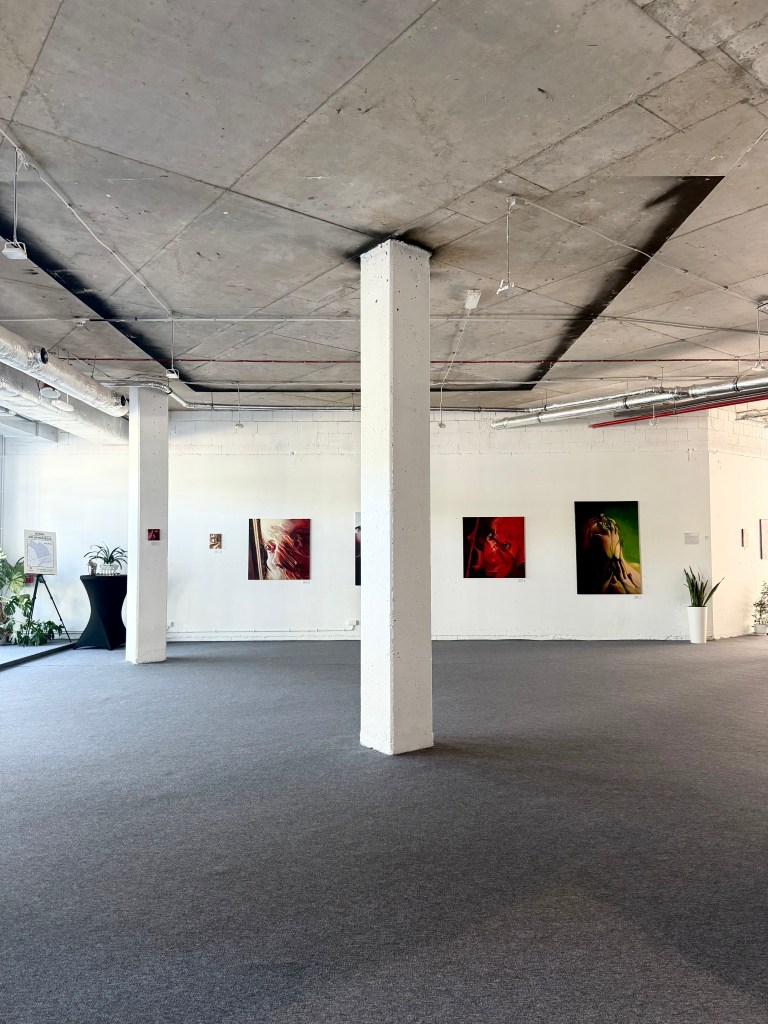
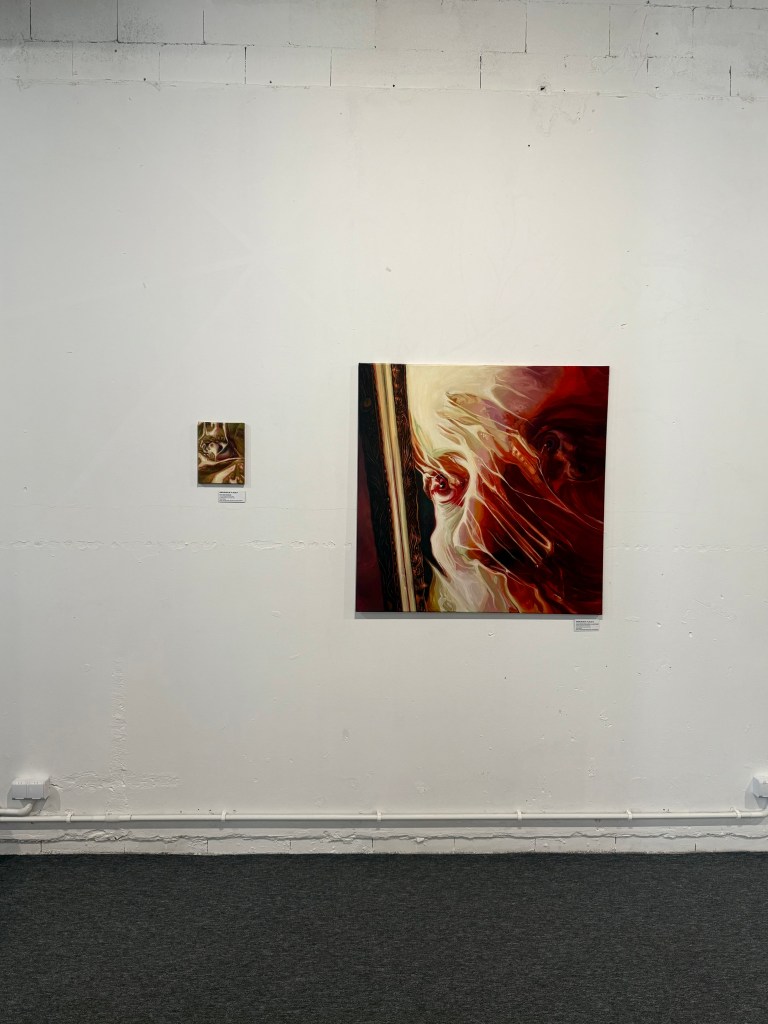
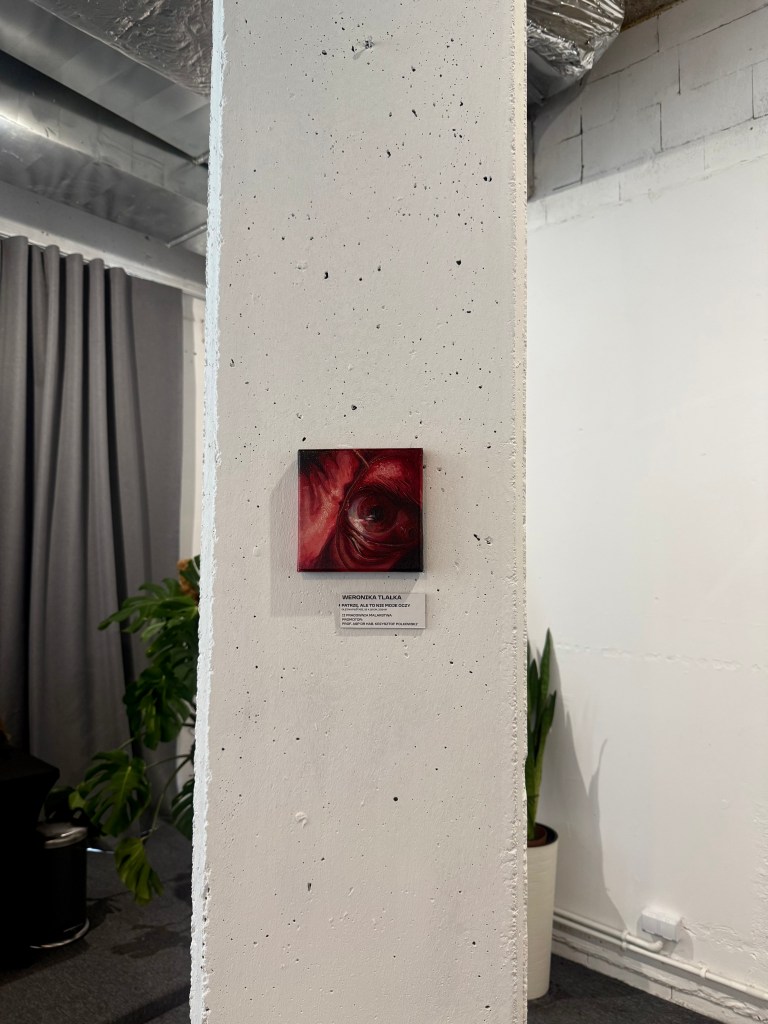
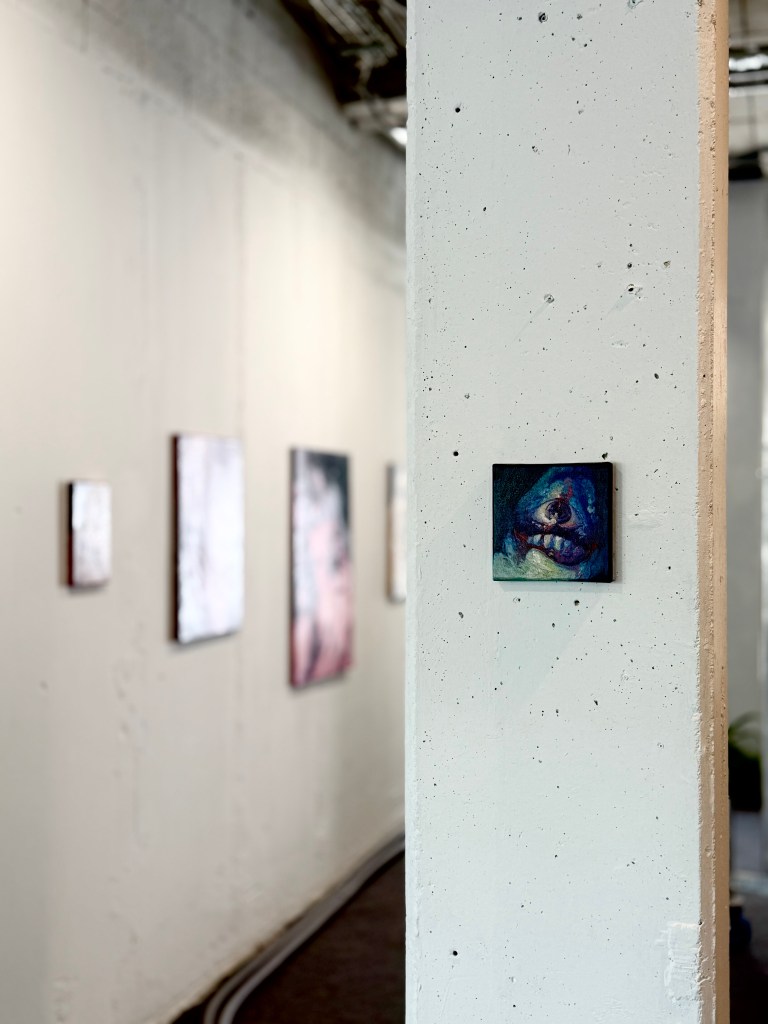
My main diploma, which is painting, entitled Everything I see in my eyes. I just don’t know if I want to, is a visual interpretation of emotional states. Although the starting point here is my personal experience, the intention is to open the space to the universal experiences of the recipients. I started each of the works with the thought: „this is about me”, but I ended with the reflection: „this does not only happen to me”. In addition, these paintings are also an attempt to express what shapes our lives and relationships with other people. I want the recipient to find a part of themselves in my paintings – their own emotions that they have experienced, even if they have never been named. My painting focuses primarily on difficult experiences and strong emotions. Although I also experienced happiness during this time, the mourning after the loss of my pet cast a strong shadow over the entire creative process – present in each of my works as a silent but significant emotional component. One of the key elements through which I try to convey emotional tensions is the human face – fragmented, distorted, hidden or exposed. However, the eye is at the centre of my search – symbolic and anatomical at the same time. I believe that it is the eyes, as the mirror of the soul, that allow us to read what cannot be masked by facial expressions. Their deformations and multiplications become a tool in my paintings to strengthen the message and show the multidimensionality of experiences.
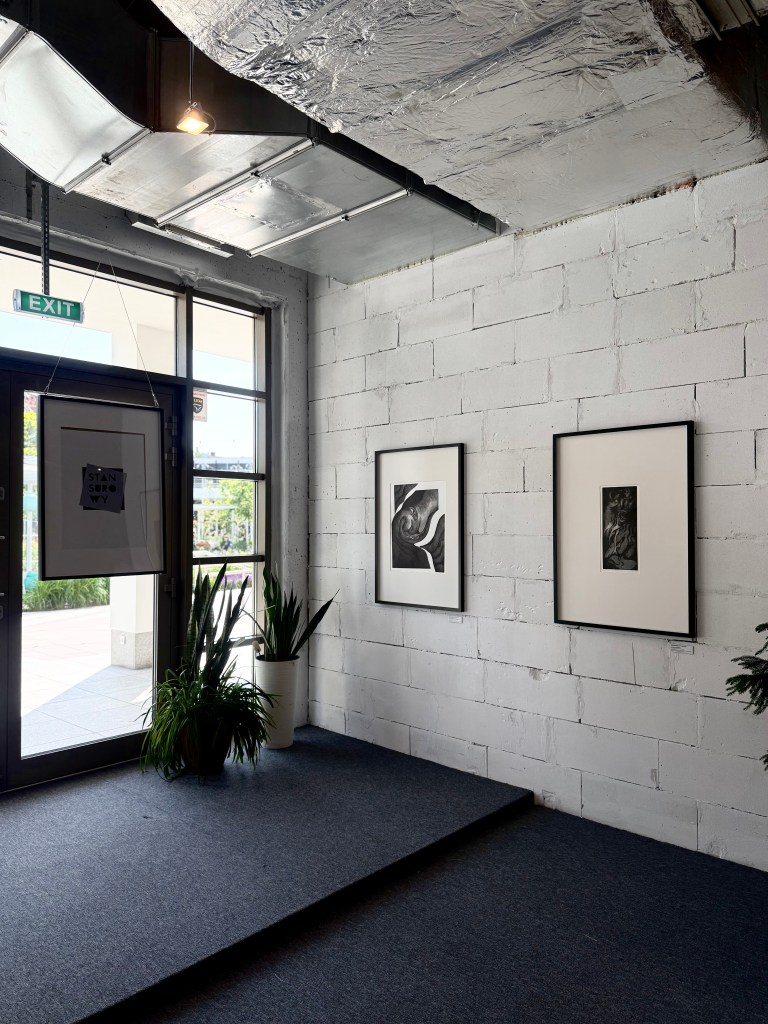
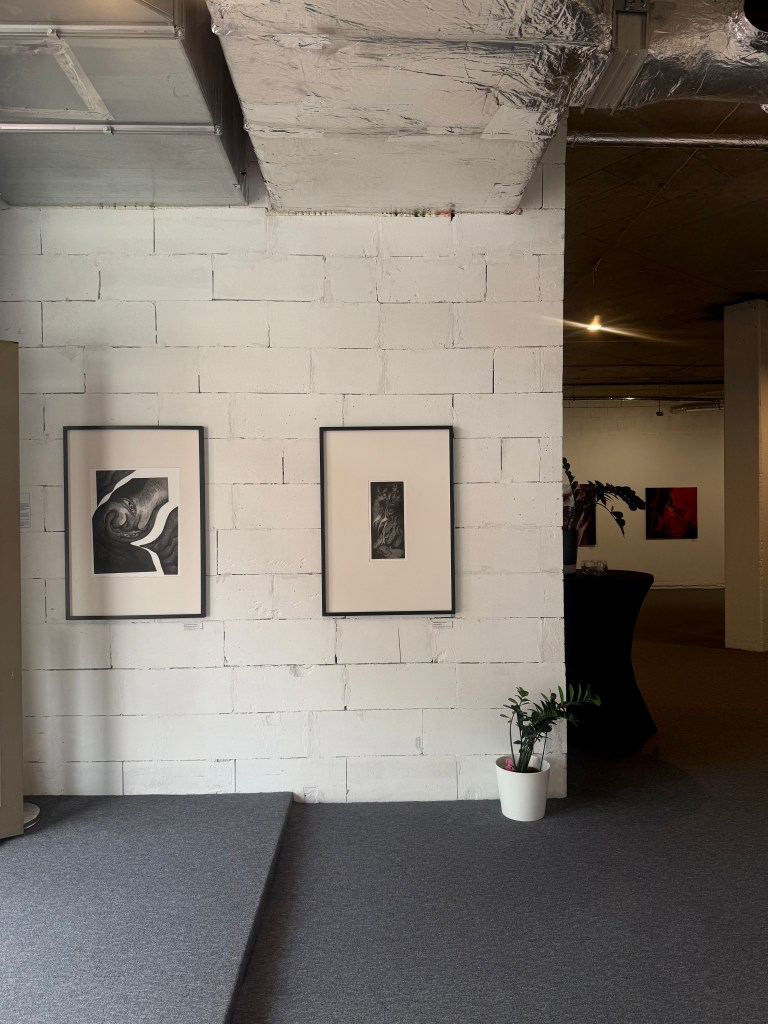
As for the annex, it is a series of graphics made using the intaglio printing technique. It is a visual attempt to reconstruct the world of dreams, or rather nightmares, in which the boundaries between reality and imagination are blurred, and fears, longings and memories take on symbolic form. These graphics are a journey through the subconscious, where imagination mixes with real experience. The motif of the eye also appears in these works – both human and non-human. These eyes do not only function as passive observers – on the contrary, they seem to penetrate reality, having access to what is hidden, subcutaneous and unexpressed. Black colour, which dominates my works, becomes a metaphor for the unknown, a space from which images emerge that are difficult to define unequivocally – just like dreams, whose meaning often eludes rational cognition. The annex is also an attempt to find the intersection between nightmare and reality – a place where dreams begin to influence the perception of reality. While working on this series, I was constantly fascinated by horror literature – in particular the works of H.P. Lovecraft, who masterfully operated with uncertainty, inexpressible fear and the mystery of existence. These inspirations have left their mark on the character of my graphics, which seek an alternative reality – one laced with anxiety, but also curiosity.
The final element of the diploma is a theoretical work entitled Deconstruction of the World. Selected Images of Horror in Art. My goal in this work was to analyze the elements that can, in various ways, contribute to the creation of works by artists that cross the boundaries of social aesthetic and moral norms. The impulse to take up this topic was a recurring question: why do – at least some of us – turn to what scares, disgusts or moves us in an uncomfortable way? Where does the need to explore the dark sides of human existence come from? In the course of my research, I came to the conclusion that the key here is played by primary psychological mechanisms – curiosity, the desire to learn the forbidden, and the fear of death deeply rooted in human consciousness. Artists who take up the subject of horror often deconstruct our world, creating alternative realities in which the binding rules cease to function. Through this process, they reveal what may be hidden – both in culture and in individual experience.
All the elements of my diploma are connected by a common denominator – an attempt to capture and process what is ambiguous, uncomfortable, emotionally complex. Painting, graphics and theoretical work are three complementary forms of expression, the coherence of which results not only from recurring motifs but above all from the internal need to understand and tell the world through the prism of one’s own experiences and interests.